
A bridge too far?
Developing your song journey
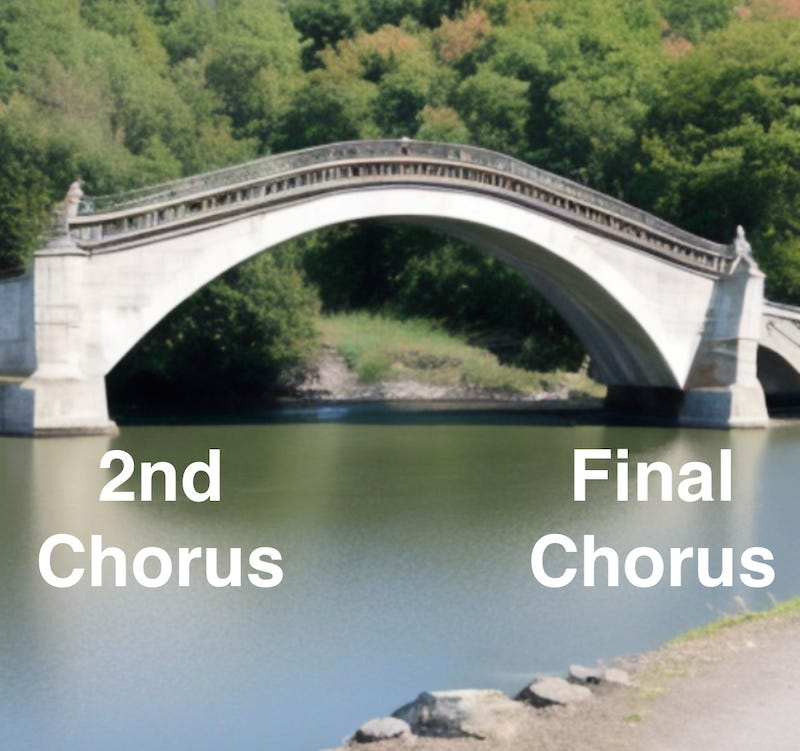
You need to keep the listener engaged or tell a story in three to four minutes. Bridges can provide an interesting detour or ‘gear change’ in your song, though there are other ways to get to your destination.
Typically appearing around two-thirds through a song and between the second and final chorus, a bridge provides contrast and a temporary departure from the main theme.
Bridges often introduce a new melodic, harmonic or rhythmic element which builds anticipation for the song’s finale.
Bridge or middle eight – what’s the difference?
Not every bridge is a middle eight. A middle eight, typically 8 bars long, is a specific type of bridge which had its origins in the Tin Pan Alley1 era. It has a 32-bar AABA song form with B being the bridge.
Also, the term “middle 8” is more common in British English while “bridge” is the standard U.S. term.
‘Over the Rainbow’ is a classic example of this song form. Another is the jazz standard I got rhythm: the A section has a I-vi-ii-V chord progression and the B section moves through the circle of fourths, III7-VI7-II7-V7.
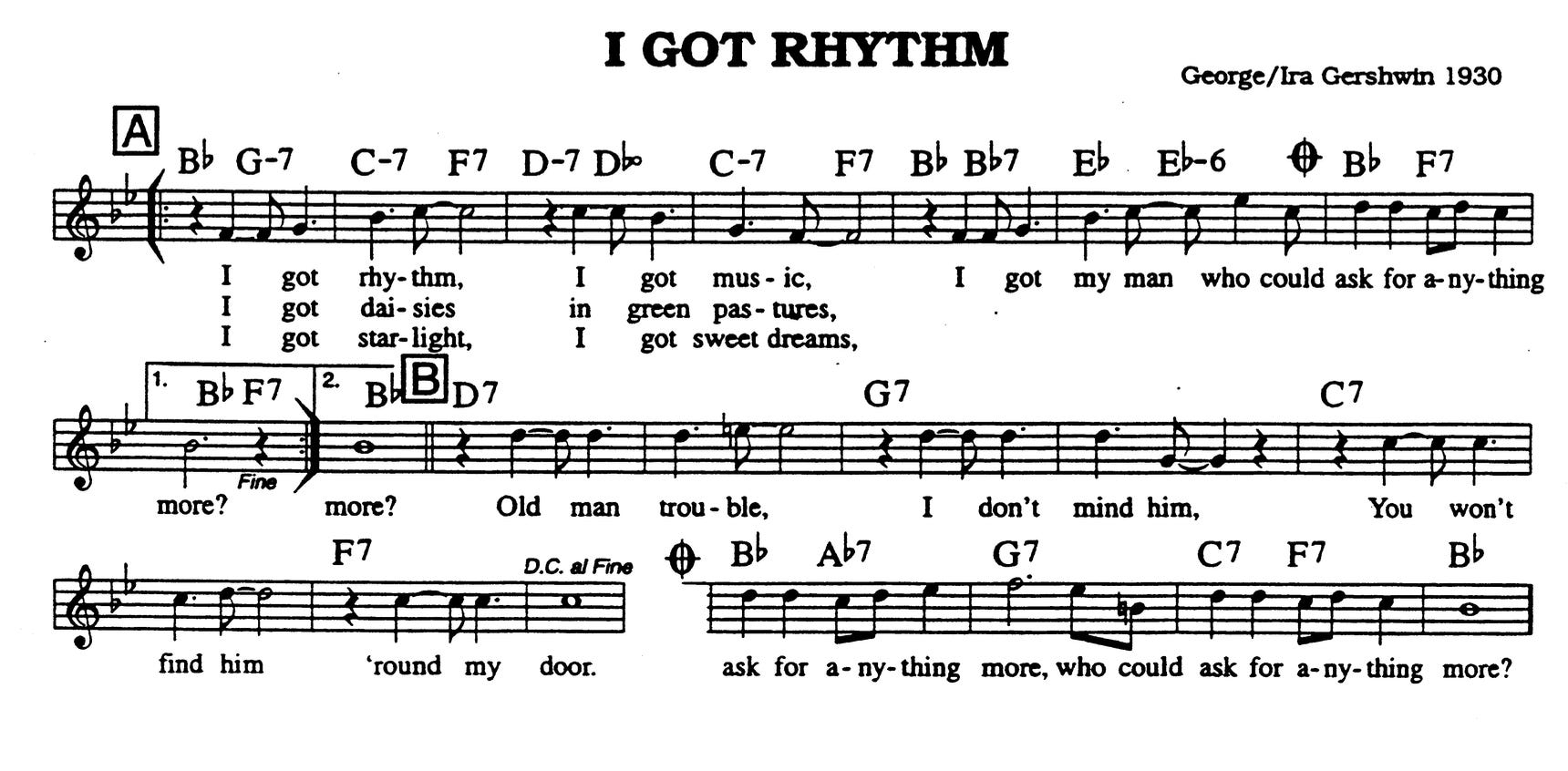
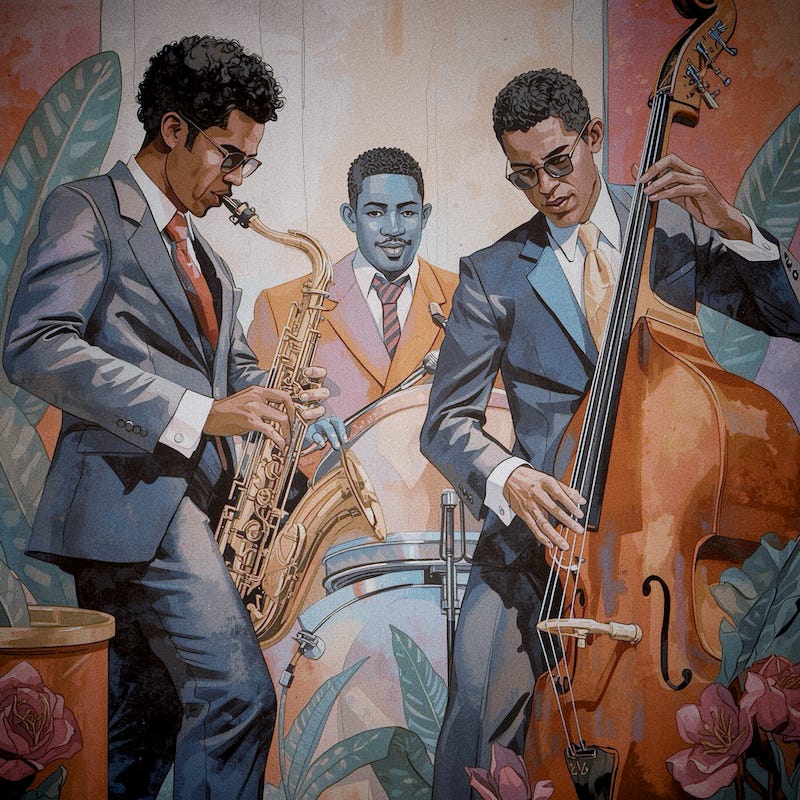
The bridge in jazz often modulates to a related key, introduces a different harmonic rhythm or contrasting melodic ideas, and sets up a dramatic tension/release dynamic before resolving back to the A section.
Bridges from Beethoven to The Beatles
The bridge structure draws from earlier forms like the rondo used by composers during the classical period including Beethoven and Mozart. The form’s main theme A alternates with contrasting themes, or ‘episodes’, to give patterns such as ABACA.
By the mid-20th century, bridges became staples in popular music, for example, The Beatles’ Yesterday which features verses and a bridge, but no chorus, AABA.
There is an intense melodic shift but no distinct key change in the bridge of Yesterday as it frequently moves between F Major2 and its relative minor, D minor, throughout the song.
The Beatles’ song Something has a more distinct key modulation from C Major in the verses to A Major in the bridge. Other examples of this type of shift include Bryan Adams’ Summer of 69, (D Major to F Major) and Coldplay’s Clocks (Eb Mixolydian to Db Major).
Some bridges feature a change in time signature such as The Beatles We can work it out (4/4 to 3/4) and the solo in Pink Floyd’s Money (7/4 to 4/4).
Other types of song journeys
Instead of a traditional bridge, songs can travel through a distinctive mood shift by introducing a change in dynamics or a different stylistic approach without necessarily changing key. This can be achieved by a different vocal intensity, adding more layers or dropping or adding instruments.
Examples include Taylor Swift’s Cruel Summer with its high-energy bridge which includes shouted lyrics, and The Chainsmokers’ Closer ft. Halsey, where instrumentation is dropped out, sometimes to a single vocal with keyboard, providing contrast to the full sound.
Then there are the songs that were made for greater things, creating an emotional storytelling arc with dynamic contrast and textural buildup that takes the listener on a grand journey.
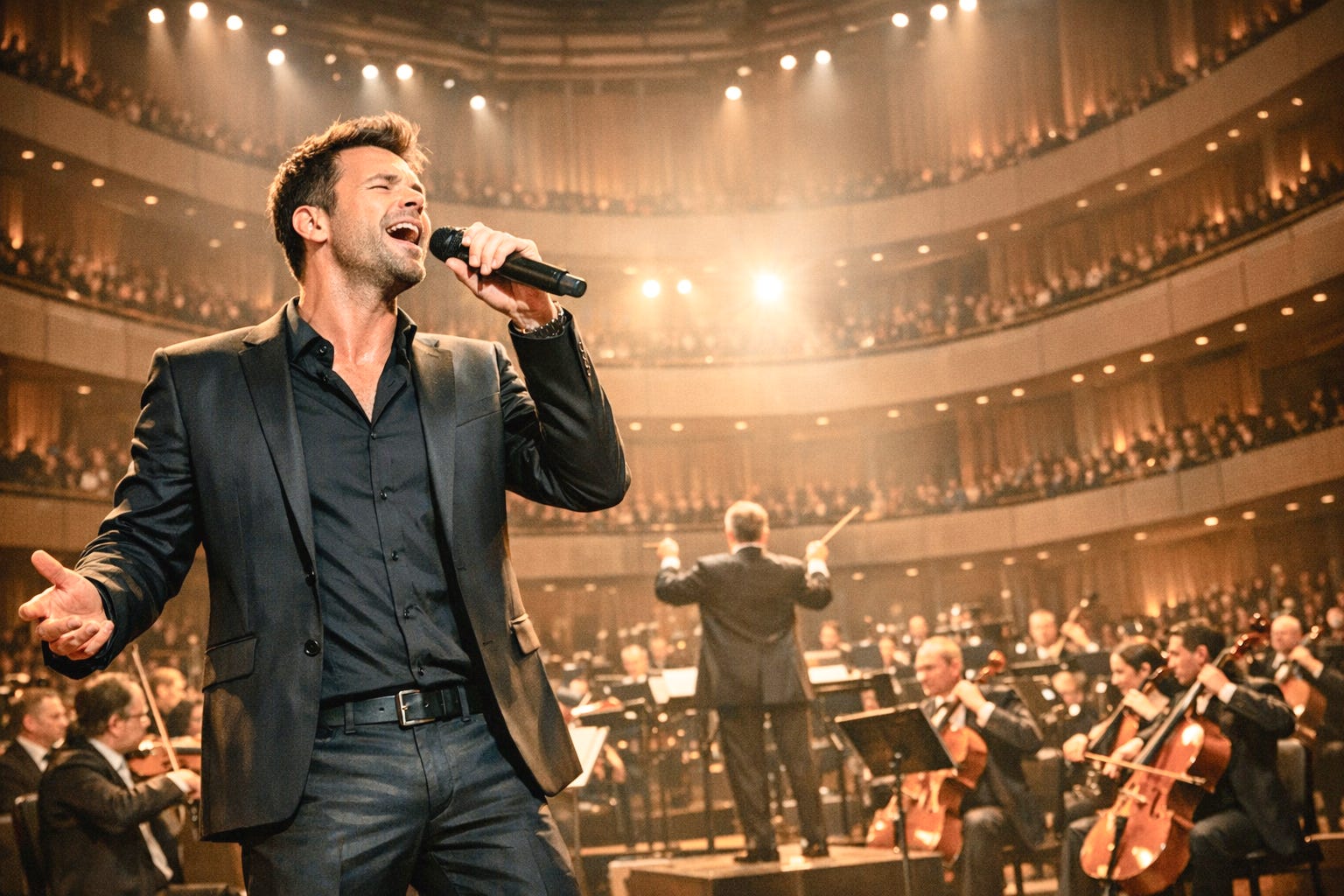
Simon & Garfunkel’s Bridge over troubled water starts as an understated piano ballad before gradually building in intensity and developing into a full orchestral ‘Wall of Sound’3 production.
Sleep Token’s multi-genre, 8+ minute epic Take me back to Eden begins with ethereal vocals, then accumulates layers and tension, ending with heavy metal aggression.
Replacing the disappearing bridge
Traditional bridges have become less common in recent decades, particularly in mainstream pop—though some major artists including Taylor Swift still include bridges in their songs to great effect.
Songs today are generally shorter4 and there is a trend to simpler, more repetitive forms to provide instant gratification. The ease of making loop-based music with digital software has also contributed to the decline of the bridge.

In the current TikTok streaming era, shorter songs with frequent hooks are favoured by the algorithms. As well as hook-heavy song writing, other techniques replacing the bridge include production-led breakdowns and drops, refrains and longer choruses.
With all these variations, a bridge often becomes unnecessary. For example, Miley Cyrus’ Flowers and Sabrina Carpenter’s Espresso are catchy, engaging songs that hold listeners’ attention with extended choruses as well as pre and post choruses.
While there are fewer bridges around, they are not extinct. Unless you are chasing the algorithm perhaps including a bridge could make your song stand out.
Or maybe explore a different song structure.
If you write in a singer-songwriter style, your song might lend itself to a simple verse chorus pattern ABAB. Examples here include Tracy Chapman’s Fast Car and Ed Sheeran’s Galway Girl.
Or for narrative story-telling, use a verse only or AAA format. This structure often includes a recurring refrain at the start or end of a verse. Classic examples are Bob Dylan’s The times they are a-changin’ and Johnny Cash’ I walk the Line.
Bridge image made with DiffusionBee
Jazz trio image made with Canva
Singer with orchestra and pop singer made with Microsoft Copilot
https://en.wikipedia.org/wiki/Tin_Pan_Alley
McCartney originally played the song with his guitar tuned down a whole step, playing the chords as if it were in G
https://en.wikipedia.org/wiki/Wall_of_Sound
But many songs were also shorter in the 1960s due to radio demands and physical (vinyl) limitations